“Scared the living hell out of me, and I’m pretty hard to scare.” – Stephen King
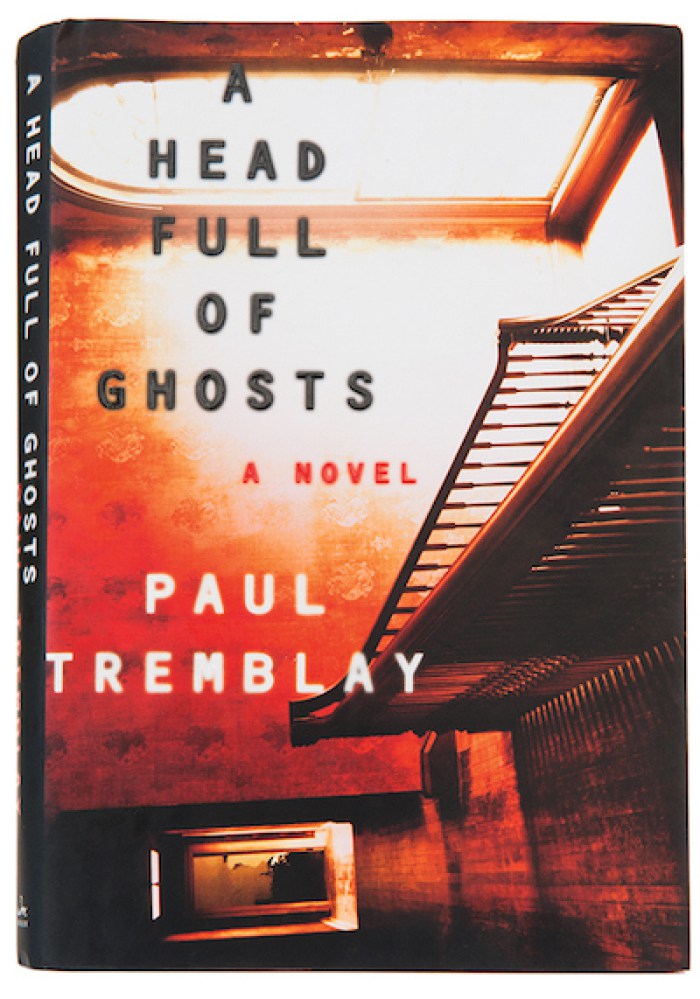
When I read a review that mentioned Stephen King found A Head Full of Ghosts very disturbing, I was sold.
Speaking of Stephen King, what is it about New England that makes it a favorite setting for horror fiction? From Nathaniel Hawthorne’s gothic mysteries to HP Lovecraft’s soul-destroying cosmic monsters to King’s vampires, aliens, and psychopaths of modern-day Maine, it’s been a popular location for many great American horror stories.
Perhaps it’s the history and folklore, like the infamous Salem witch trials and the oral tradition of countless ghost stories… New England is full of small towns where people keep to themselves, suspicious of outsiders, with terrible secrets hidden behind closed shutters. Horror writers have long speculated on what ancestral perversions may lurk beneath the quaint façades of New England’s historic towns.
Or maybe it’s the physical features of the region – mist-enshrouded forests with lonely country roads flanked by murky bogs, no doubt concealing some eldritch abomination.
New England is practically overflowing with ancient cemeteries and derelict haunted buildings hidden under decades’ worth of unattended foliage, many with dark windows and crooked shutters that suggest the darkest of possibilities. All of which is excellent fodder for imaginative storytellers trying to convince us of ancient evils in our midst.
Let’s just say that it’s probably some combination of history and physical environment.
*****
Following in this tradition, Paul Tremblay’s 2015 novel, A Head Full of Ghosts, is set in Beverly, Massachusetts, a small town just across the river from Salem, the epicenter of New England’s dark and troubled literary history.
Where it breaks from the tradition, however, is that it isn’t your typical horror novel. If you’re expecting lurking vampires or monsters or fish people, you won’t find them here. Whether or not you believe in supernatural phenomena, A Head Full of Ghosts is a masterful work of psychological horror that will scare you because it takes you to a place you may not want to go.
If you’re a reader of horror fiction, you’ll recognize quite a few horror tropes (the weird old house, the creepy child, religious obsession, etc.) and many references to other works in the literature and film genres. In addition to Lovecraft and King, there’s a definite Shirley Jackson vibe, as well as obvious nods to The Exorcist and Paranormal Activity film franchises.
A Head Full of Ghosts is also a commentary on the moral bankruptcy of reality television and how mass media and the internet influence how we interpret our reality and what we perceive as horror. What’s particularly unsettling is how easily media influences and pop culture can set the parameters of that reality.
*****
The narrator of this tale is 23-year-old Merry Barrett, who is being interviewed by an author who wants to write a book about her – more specifically, about a catastrophic event 15 years ago that left Merry as her family’s sole survivor. But Merry’s personal trauma is different… unlike most family tragedies, it was played out on a national stage.
In time, it becomes apparent that Merry’s long-buried memories of the events conflict with what the public was led to believe on TV. And now a mysterious blogger has surfaced, seeming to have inside knowledge about what happened. Why is she obsessed with the Barrett family and their reality TV debacle… and how does she know so much about them?
*****
Like so many other tragic stories, this one begins with a family under pressure. Her father John is unemployed and has been for some time with few job prospects. Sarah, her mother, is cynical and more practical than her husband. She resents being the sole breadwinner and having to support the family entirely on her own. Despite her best efforts, it’s still not enough to keep them going, and the family’s resources are running out.
Things only get worse when Merry’s older sister, 14-year-old Marjorie, begins to show signs of acute schizophrenia. The doctors don’t seem to be able to help her, and as she descends into madness, her born-again hyper-religious dad decides she’s demon-possessed. With the support of a local priest, he makes a deal with a TV network eager to produce a reality TV show around them – The Possession – which he sees as a way to solve all their problems at once.
With unemployment and Marjorie’s rising medical bills, the family thinks they’ve found financial salvation by selling themselves to reality television. But the sudden financial windfall doesn’t stop the unraveling, which actually accelerates with the arrival of the TV production crew – it simply adds another layer of complications. As you might have guessed, the situation spins out of control. And it turns out that opening their lives to the TV cameras was the worst thing they could have done.
*****
Merry, who is just 8 years old when the events take place, is the epitome of the literary “unreliable narrator.” There’s always an element of uncertainty about what parts of her story are true, what’s made up, and what her mind has blocked out.
Being 8, she has a typical 8-year-old’s perspective on things, from her obsession with pop culture and reality shows (her particular favorite is Finding Bigfoot) to retreating into fantasy when reality proves to be too painful.
Merry does her best to navigate as her family implodes around her. She’s desperately trying to believe in the people she loves, wishing for everything to be okay again.
Her intense emotional dependency on her sister (even more so than on her parents) leaves her vulnerable to Marjorie’s manipulations, and Marjorie turns from Merry’s best friend to her worst nightmare. As Marjorie’s mental state deteriorates, Merry begins to distrust and actually fear her.
What’s wrong with Marjorie? Is she really possessed? Or is she mentally ill? Or just putting on a show for the television cameras (not at all uncommon in so-called “reality” shows)?
*****
From the beginning, you’ll probably come up with your own theories about what really happened to the Barrett Family. Then as the tension continues to build, you’ll certainly rethink the conclusions you had come to before. And when the ending hits you, and you’ve arrived at your own interpretation of the truth, I promise it will make you very uncomfortable.
A Head Full of Ghosts is not your garden-variety horror novel. The supernatural elements may or may not be key to interpreting the story, but either way you can take it as a cautionary tale about the consequences of lies, greed, and unanticipated celebrity, and how our perceptions can be twisted by what we believe to be real.
A Head Full of Ghosts is the winner of the 2015 Bram Stoker Award for Superior Achievement in a Novel and is headed for the big screen in late 2018.