
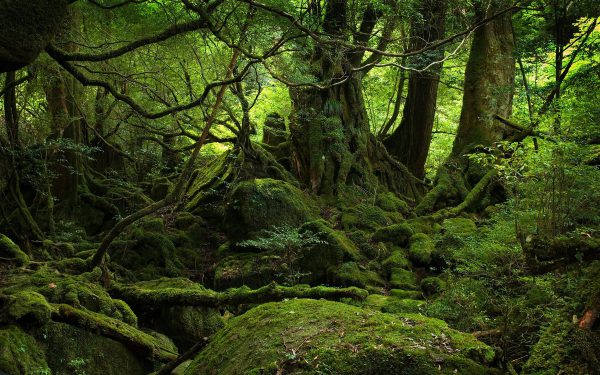
San Francisco’s Golden Gate Bridge is the world’s most popular place to commit suicide.
Second most popular is Japan’s Aokigahara Forest, 13.5 square miles of woodlands at the base of Mount Fuji, so dense that it’s known as Jukai – the Sea of Trees. It’s also known as the Suicide Forest or the Demon Forest.
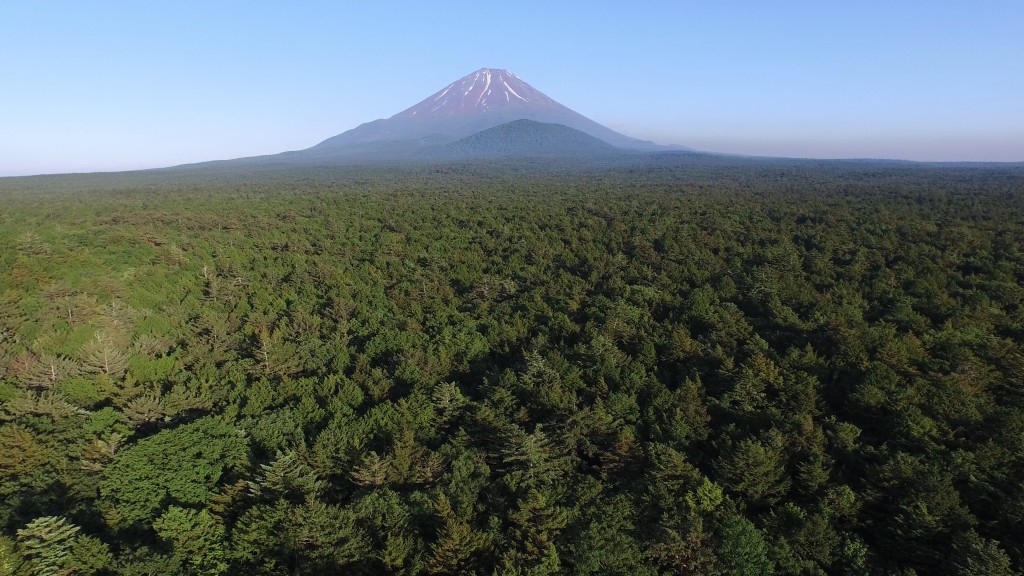
Aokigahara is a place of great natural beauty, favored by hikers and tourists who come for its breathtaking vistas of Mount Fuji, ancient trees, lava plateau, and the Narusawa Ice Cave.
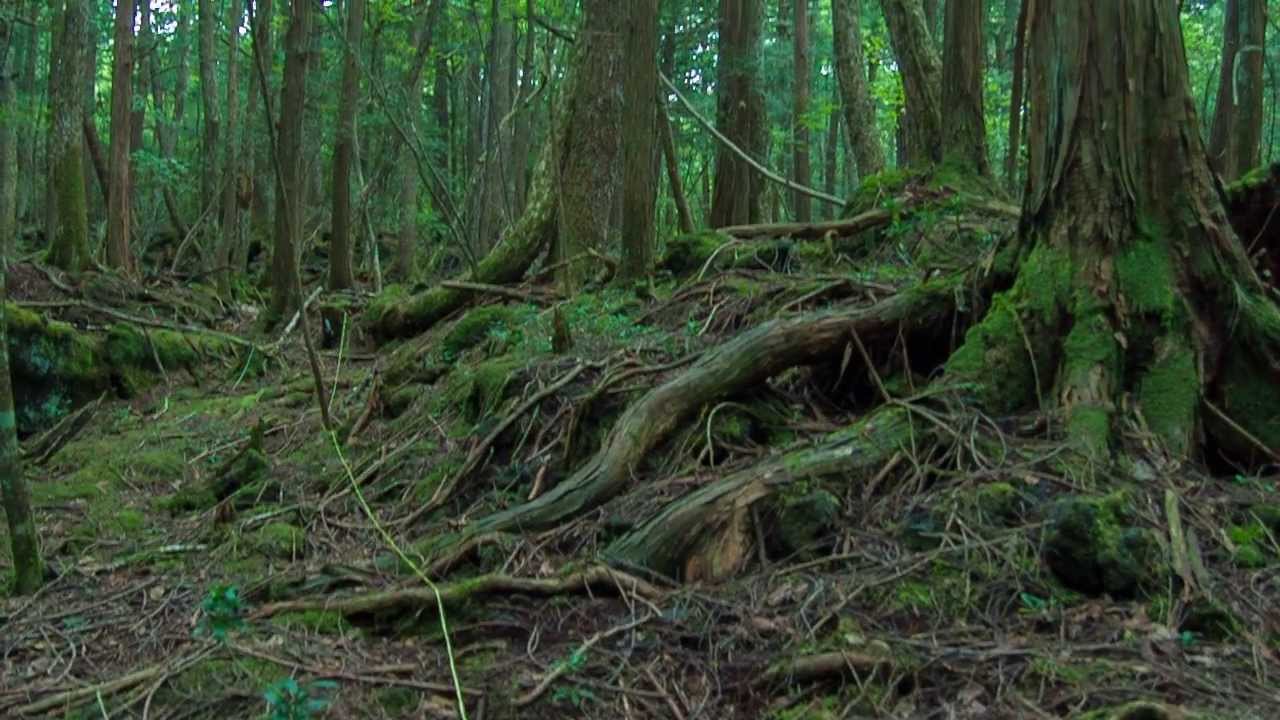
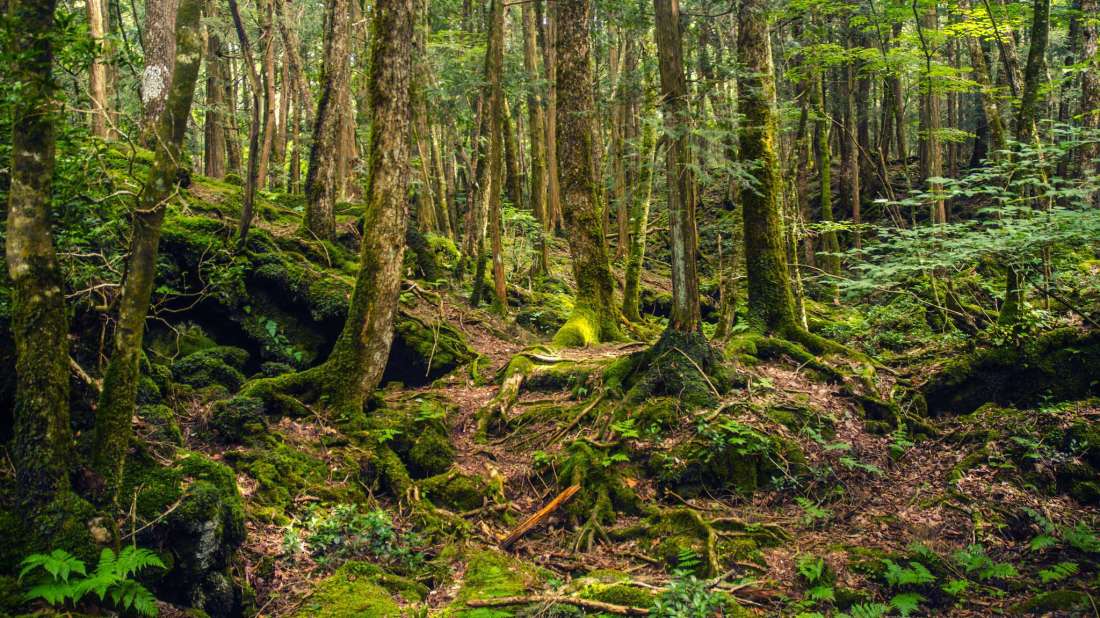
The aptly named Sea of Trees is also unique in that the trees are so densely packed that it’s incredibly easy to get lost – perhaps even fatally lost. The foliage is so thick that in many places the sun is nearly blocked out, and breezes are seldom able to penetrate the leafy canopy. Few animals and birds live there – even forest creatures have difficulty moving around the twisted tree trunks and undergrowth and the rough volcanic rock terrain. Thus, there is often a deathly, almost complete silence that distorts perceptions and causes faraway sounds to seem close by… interpreted by some as the moans of restless ghosts.
 Since the 1950s, untold numbers of visitors have entered Aokigahara, never to be seen alive again. In the earlier years, between 10 and 30 people per year met their deaths in the Suicide Forest. By 2002, that had increased to 78, and in 2003, 105 people. (The local government has stopped releasing the actual numbers in an effort to avoid encouraging others who might follow in their footsteps.)
Death by hanging is the most commonly chosen suicide method in the forest, followed by poisoning or drug overdose.
*****
Japan has one of the highest suicide rates in the world – perhaps due in part to a cultural reluctance to openly discuss mental health issues, making people suffering from depression or other mental illnesses less likely to reach out to get the help they need.
The suicide rate is especially high in times of economic turmoil, and Aokigahara is best knownas a suicide destination for Japanese “salarymen”(white collar workers) who have lost their jobs, fallen into debt, or are experiencing some other sort of economic hardship.
Although financial problems account for many of Japan’s disproportionate number of suicides, other unique cultural and historical factors also play a part. Self-inflicted death is considered unacceptable for religious or moral reasons in many other countries, but it doesn’t carry the same sort of stigma in Japan.
Back in Japan’s feudal era, Samurai warriors committed seppuku (ritual suicide by disembowelment) rather than be captured by an enemy or otherwise shamed in some way. Suicide was not just permitted but was actually glorified as an honorable way of accepting responsibility. “Honorable suicide,” though it’s no longer the norm, is a remnant of that culture that still persists.
People from all walks of life come to the Suicide Forest to end their lives.
While job loss and debt are cited as the most common motives for those who come to the forest to die, economic reasons aren’t the only things that bring desperate people to Aokigahara. It’s also a preferred final destination for the clinically depressed, for those disappointed in love, and for the terminally ill. In recent years, the forest has also seen a number of suicides of those who have lost loved ones in natural disasters like the March 2011 earthquake and tsunami.
Many people who have come to the forest to commit suicide were inspired by a popular 1960 novel in which a heartbroken lover goes into the Sea of Trees to take her own life. Another book that feeds the mystique of the Suicide Forest is The Complete Suicide Manual, which declares Aokigahara to be “the perfect place to die.” The book has been found alongside corpses in the forest or among their abandoned possessions they left behind.
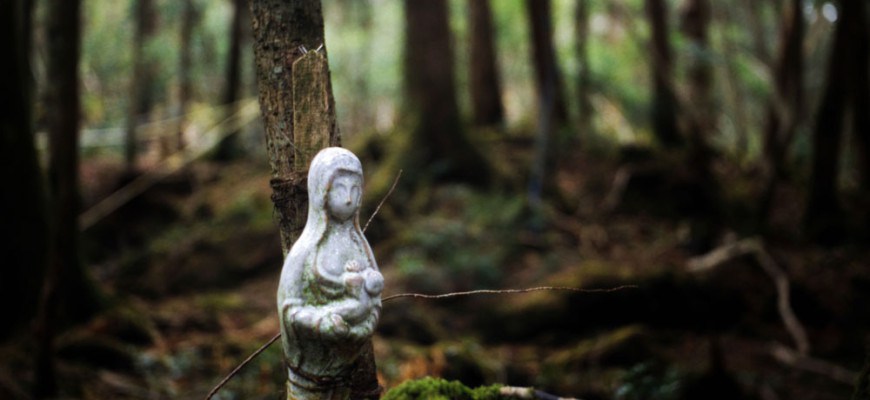
But there’s something else that may account for the pervasive feelings of sadness and dread that many visitors describe…
Until as recently as the nineteenth century, Aokigahara had a reputation as a place for ubasute – a practice in desperate times of famine or drought where elderly or sick family members (usually women) were taken to a remote area and left there there to die of starvation or exposure… one less mouth to feed. The ghosts of these abandoned people are also said to haunt visitors to the forest, and there have been reports of the shades of women in flowing white robes gliding through the deep canopy.
Japanese spiritualists believe that the angry ghosts from the suicides and ubasute have possessed the trees themselves, and the dark magic there prevents people who are lost from finding their way out. The ghosts, known as yurei, haunt the forest and are believed to be malevolent, tormenting visitors and luring victims off the paths to become hopelessly lost in the trees.
Unfortunately, once you’re lost in Aokigahara, you’re well and truly lost. With the vastness of the forest and the densely packed growth, there have been reports of hikers and non-suicidal visitors who wandered off the path, simply disappeared, and were never found.
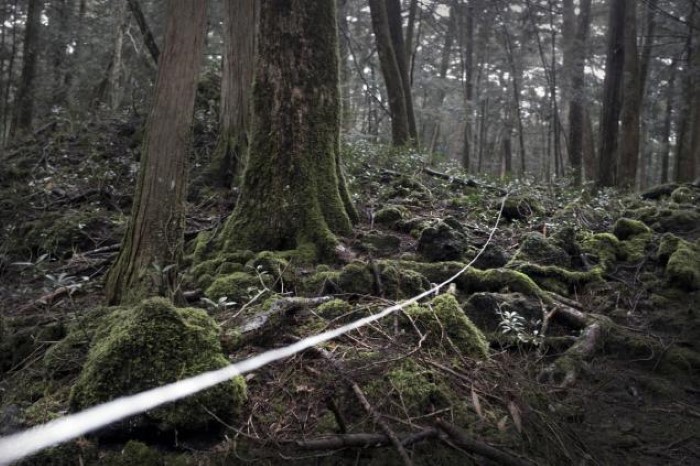
Hikers and volunteers often use tape markers to mark their routes because it’s so easy to become disoriented and lose one’s way. What’s more, massive magnetic iron deposits in the forest’s volcanic soil can disrupt cell phone service and GPS signals and can interfere with compass readings…which has also been attributed to the ghosts and demons who haunt Aokigahara.
The local authorities do their best to prevent as many suicides as possible. This is especially difficult because of the size and density of the forest. A person who has come there to die is unlikely to cross paths with someone who might talk them out of it.
Police presence in the forest has been increased, and surveillance cameras have been set up at the entrance. Past experience has taught them to determine which visitors are more likely to have suicidal intentions – for example, those who arrive without hiking gear.
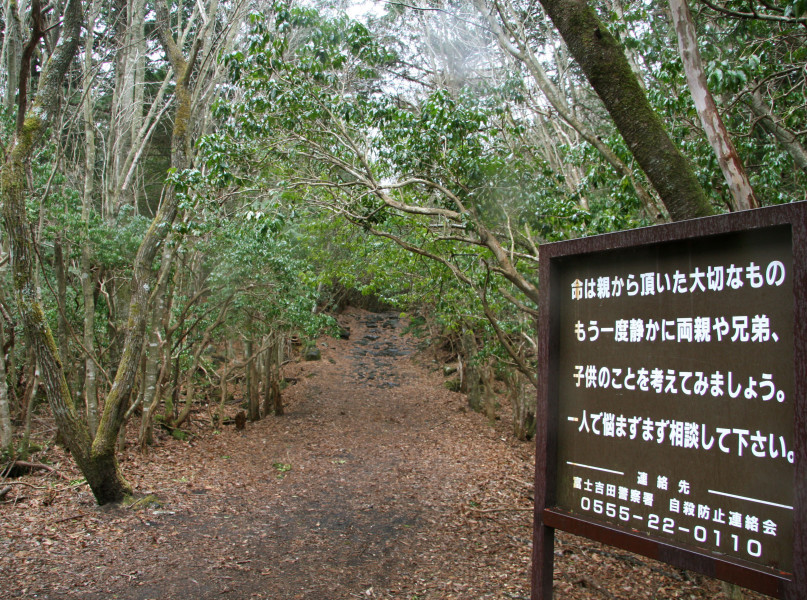
Suicide counselors and police have also posted signs all along the forest paths with anti-suicide messages such as “Your life is a precious gift from your parents,” and “Think of your family,” and “Please consult the police before you decide to die!”
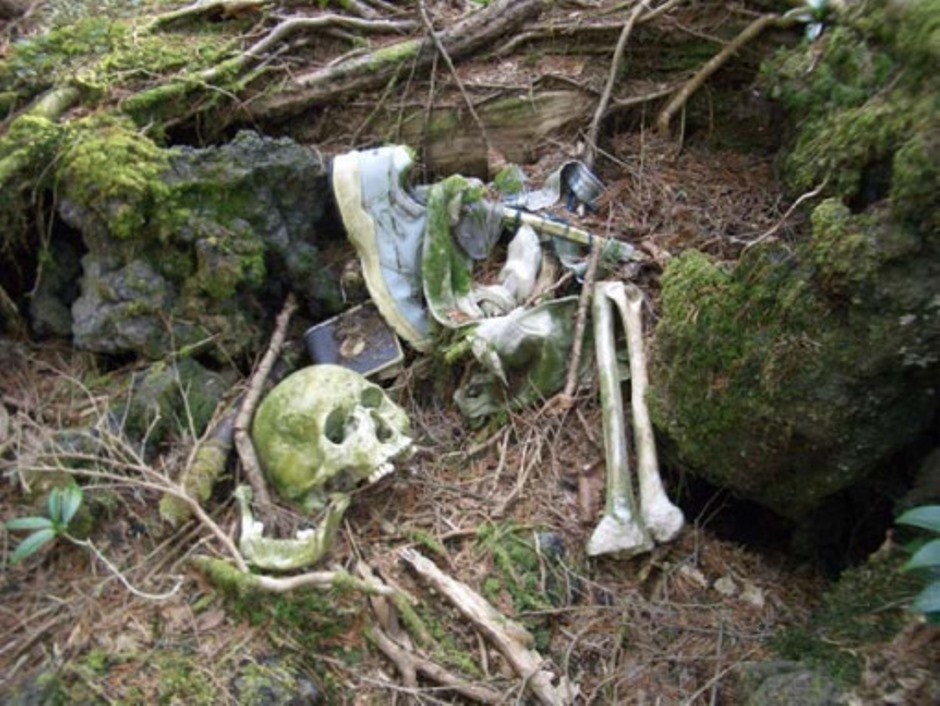
It’s hard to say how successful these efforts have been. Every year, dozens of corpses are found by volunteers who regularly patrol the forest. But because it’s impossible to patrol every inch of the incredibly dense undergrowth, many corpses are disrupted by animals or covered by vegetation and aren’t found for years… if ever.
In traditional Japanese spirituality, people who have died by their own hand or in an unnatural way are said to be prevented from joining the spirits of their ancestors if certain rituals are not followed.
For that reason, there’s a specific set of protocols that must be followed by the suicide patrols. When they discover human remains, they will reverently transport them to a local police station where there’s a special room devoted to holding suicide victims. Some believe that if a suicide’s corpse is left alone, the ghost will scream through the night, and the body will move around on its own. The body can’t be left alone, so the forest workers play jan-ken-pon (rock-paper-scissors) to determine who has to sleep in the corpse-holding room until it’s picked up the next day.
*****
Earlier this year, there was a scandal of sorts when YouTube celebrity Logan Paul visited Aokigahara and broadcast the image of a suicide victim on his channel. He claimed he was only trying to raise awareness, but posting the video of the man’s corpse on YouTube was considered deeply disrespectful .
Aokigahara isn’t a haunted house or a place for ghoulish thrills. Despite its natural beauty, it’s the resting place of many departed souls. If you should visit The Sea of Trees, always remember to be considerate of the memory of those who have made the forest their final destination.
According to the CDC, risk factors associated with suicide may include mental disorders such as clinical depression, previous suicide attempts, barriers to accessing mental health treatment, physical illness, and feelings of hopelessness or isolation.
If you need help, call the National Suicide Prevention Lifeline at 1-800-273-TALK.
Wow. Excellent article. Certainly a complicated cultural issue for Japan. It sounds like a fascinating natural area. Strangely, I would like to visit. It makes me think of the evil influences of Mirkwood. Thanks for the information at the end, people need to hear it every day, that it’s OK to have MH problems, you’re not alone and that caring people are available to help. <3