
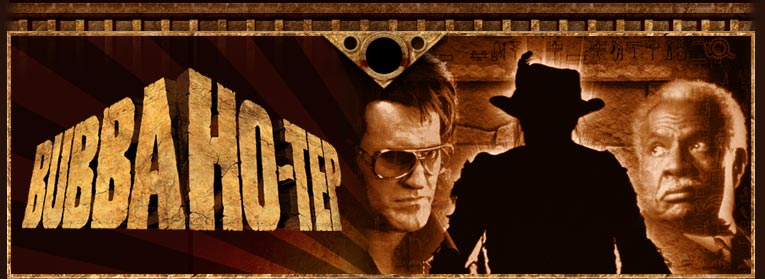
Director: Don Coscarelli
Stars: Bruce Campbell, Ossie Davis
Snack Report: The return of Taco Doritos (the original!)
Viewing Companions: Zelda, Mr. Falbeaux
(Cue Twilight Zone music)
Imagine if you will… that Elvis Presley didn’t expire in the master bathroom at Graceland in 1977 as we have been led to believe.
You see, Elvis was tired of the celebrity grind, the phoniness, the hangers-on. So he switched lives with an Elvis impersonator and made a living impersonating himself. But then the faux Elvis died, and it was too late to switch back.
But he was okay with that. He didn’t mind because now he was performing on his own terms, just for the joy of it, and having fun. Until he fell off the stage one night and broke a hip, effectively ending his career.
Now, if your disbelief hasn’t been suspended enough so far, imagine that JFK didn’t die in Dallas. No! He survived the assassination attempt, and LBJ had him turned into a black man (“They dyed me this color! That’s how clever they are!”) and hidden away in a nursing home.
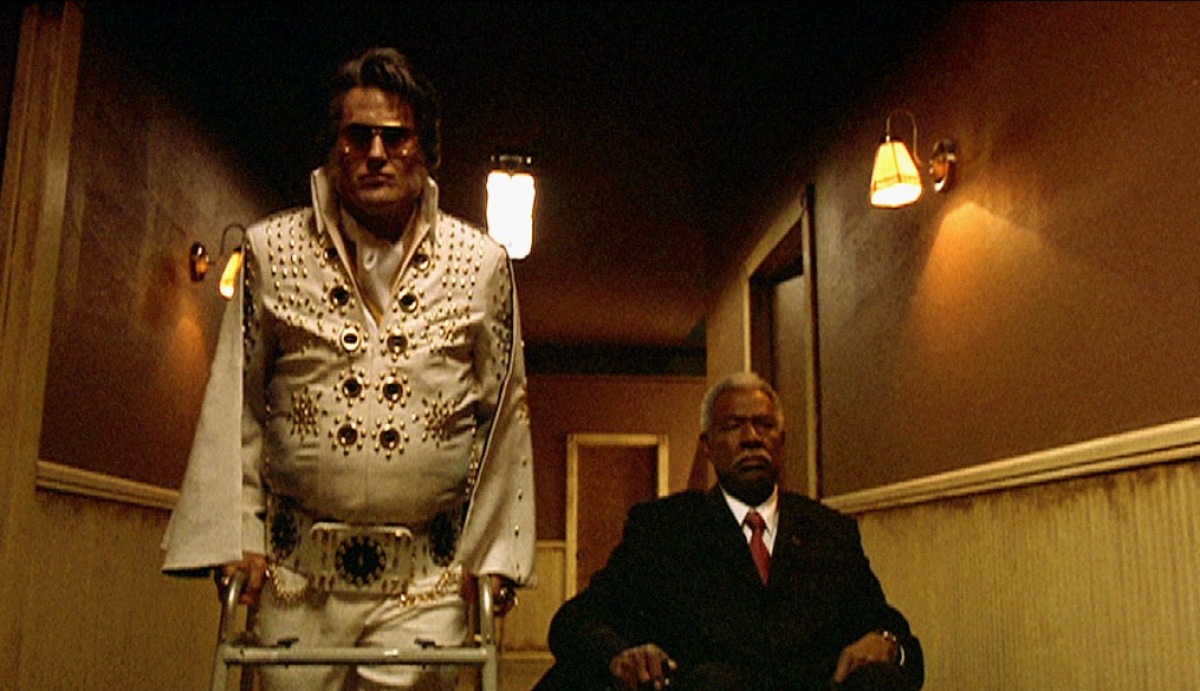
Then imagine an elderly Elvis (Bruce Campbell) and JFK (Ossie Davis) living under the radar in a shabby East Texas rest home, suffering the indignities, infirmities, and the invisibility of old age. There’s a pervasive sense of hopelessness at the Shady Rest Convalescent Home, with people who have come to the end of their respective roads, waiting around for the inevitable end.
But when an ancient predator, a soul-sucking Egyptian mummy dressed as a cowboy (your guess is as good as mine) begins to prey upon the elderly residents, Elvis and JFK make it their last mission to put an end to the moldy menace’s reign of terror.
There you have the premise of Bubba Ho-Tep, a quirky horror-comedy written and directed by Don Coscarelli, best known for his cult classic Phantasm (1979) series.
Bruce Campbell does a fine job in a tricky role – the best performance of his career, in my opinion. I’ve been a devoted Bruce fan ever since Evil Dead (1981), but Bubba Ho-Tep gave me a new appreciation for the depth of his talent. He certainly got the King’s mannerisms and voice down perfectly, and I almost believed I could be watching Elvis himself if his life had taken a different turn.
Elvis doesn’t come off as a campy caricature of himself, and his voiceover narration provides some poignant insights on regret, loss, and aging. There are certainly many funny moments, especially scatological ruminations on penile growths and poop. But even when he’s threatening the monster with his expert karate moves (“Don’t make me use my stuff on ya, baby!”), he still maintains a sense of dignity.
Speaking of dignity/gravitas, Ossie Davis is pretty convincing as Kennedy (has the Warren Commission heard about this?). His buddy chemistry with Campbell feels very natural and believable.
In the end, Elvis and Jack gear up for battle, Elvis even donning his trademark white jumpsuit. To save the souls of their friends, they fight the monster with the only tools they have at their disposal – an electric wheelchair, a walker, a bug sprayer, and a Zippo lighter.
A couple interesting notes…
Despite the fact that Elvis is the main character, not a single image of the real Elvis or song from his catalog was used in the film. Coscarelli said that the cost of licensing one song would have gobbled up half of Bubba Ho-Tep’s tiny budget.
Also, it was great to see Reggie Bannister from the Phantasm series in a cameo as the nursing home administrator, as well as other actors from Coscarelli’s previous films who turn up in small roles.
It was a pleasure to take Bubba Ho-Tep off my DVD shelf and rewatch it for the first time in years. It’s a true original with strong performances and nuanced writing – a real treasure in a world of sequels, focus groups, and lowest-common-denominator filmmaking.
For this I say, ”Thank you, Don Coscarelli. Thank you very much.”