
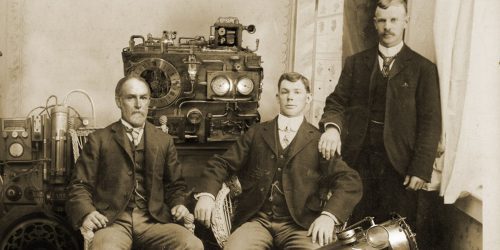
Anyone who hasn’t been living in a cave for the last thirty-or-so years knows about Ghostbusters (1984), the hit movie where paranormal scientists Venkman, Spengler, and Stantz took on the ghosts of New York City. What you probably didn’t know is that a trio of Englishmen back in the gaslamp era did it first and beat them to the punch by a hundred years.
Edmund Gurney, Frederic Myers, and Frank Podmore were respected scientists and well-known authors who were, in fact, a sort of Victorian version of Ghostbusters.
*****
In the late 19th century, science was beginning to challenge traditional religious- or superstition-based explanations of how the world works. At that time, Spiritualism (a belief system founded in the 1840s where the spirits of the dead have both the ability and the inclination to communicate with the living) had caught hold and had become wildly popular.
Unfortunately, Spiritualism was also particularly prone to deception and intentional fraud, with phony mediums, charlatans, and con artists looking to fleece the bereaved with false communications from their loved ones on the Other Side.
The Society for Psychical Research was founded in 1882 in response to the rise of Spiritualism. Some researchers were on a mission to expose and denounce the frauds; others were sincerely interested in using scientific investigation and data collection to prove conclusively whether or not the human spirit survives after death.
Phantasms of the Living
Founding SPR members Gurney and Myers teamed up with fellow SPR scientist Frank Podmore on the Committee for Apparitions and Haunted Houses, eventually publishing a massive 776-page book entitled Phantasms of the Living, Volume I in 1886. (Sadly, there was never a Volume II, for reasons you will read about shortly.) With over 700 carefully analyzed cases, Phantasms represented the first attempts to study supernatural phenomena in a rational scientific fashion.
Phantasms of the Living, in all its convoluted Victorian prose glory, can be purchased today, or even read on the internet if you’re so inclined. Though the authors’ flowery style, typical for the Victorian era, can be a challenge to get through, it was a serious investigation of ghostly phenomena, séances, deathbed wraiths, hauntings, apparitions, and mediums collected through interviews with society members, neighbors, and friends.
Even 130+ years later, Phantasms is still often used as a reference for writers who find its first-person accounts of ghost sightings very useful. In fact, it’s considered the most extensive collection of such accounts available in a single volume, as well as a valuable resource about the Victorian obsession with the occult and the supernatural.
The Census of Ghosts
Two years later, in his role as Secretary of the SPR, Frederic Myers commissioned a “Census of Ghosts,” seeking input from the public about personal experiences they had had with the spirit world. For example, interviewees were asked questions like this:
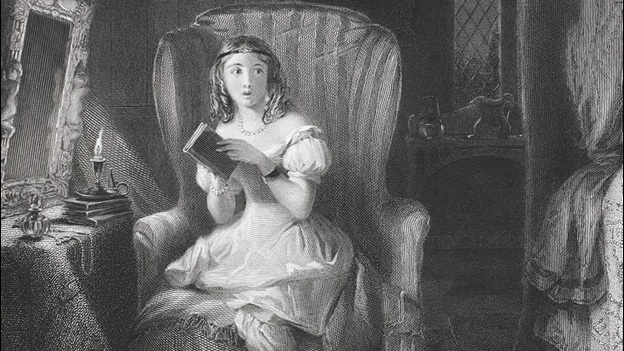
“Have you ever, when in good health and completely awake, had a distinct impression of seeing or being touched by a human being, or of hearing a voice or sound which suggested a human presence when no one was there?”
and
“Can you recall that you have ever in the course of the last ten years, when in good health, had a dream of the death of some person known to you (about whom you were not anxious at the time), which dream you marked as an exceptionally vivid one, and of which the distressing impression lasted for as long as an hour after you rose in the morning?”
The results were published in 1894. Not surprisingly, Victorian women were found to be more likely to be influenced by the supernatural; 12% of the women interviewed claimed to have actually seen a ghost, compared to 9% of the men.
William Thomas Stead
The work of the Victorian Ghostbusters probably wouldn’t be remembered today were it not for the tireless advocacy of William Thomas Stead, the godfather of tabloid journalism.
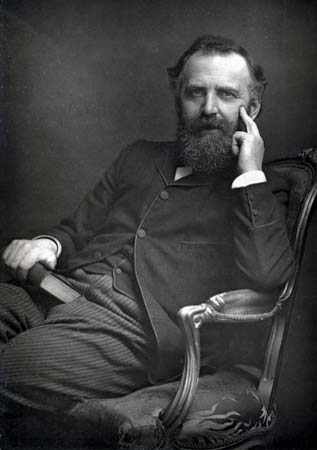
WT Stead was the controversial editor of The Pall Mall Gazette, a popular London newspaper that was in a way the Victorian incarnation of the National Enquirer. (“Screw journalistic ethics, we’ll print whatever sells the most papers!”) During Stead’s tenure, the Gazette’s attitude toward journalism was the more sensational, the better, and it’s he who deserves the credit for turning this team of three scientific investigators into celebrities.
Indeed, Stead himself was a devout Spiritualist and true believer who widely promoted Spiritualist ideas and teachings. He published many of the writings of Gurney, Myers, and Podmore, and the SPR overall – most notably the results of the Ghost Census in 1894, stating that
“of the thousand million persons now living on the planet, there would be, if they all lived to maturity, at least ten million who will see and recognize in the course of their lives realistic apparitions of dead persons.”
*****
Unfortunately, our Victorian Ghostbusters and their favorite journalist would all meet untimely deaths under mysterious circumstances.
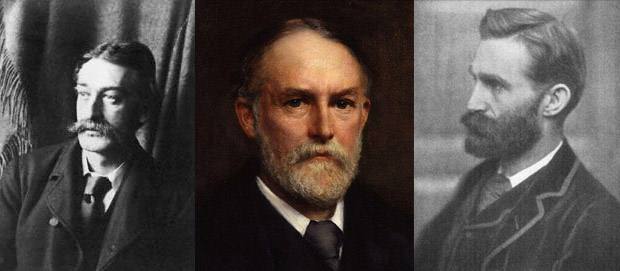
Edmund Gurney was the first to die, overdosing on chloroform on June 23, 1888. His death was ruled accidental, as he had been prescribed the chloroform for neuralgia. But those close to him believed that Gurney committed suicide; they knew him to be depressed after exposing fraudulent spiritualists whom he had considered close friends.
Next was Frederic Myers, diagnosed in 1889 with a chronic kidney disorder (Bright’s disease, now known as glomerulonephritis). Desperate for relief, he traveled to Rome, where his doctor injected him with an experimental serum made from the glands and testicles of goats. Not surprisingly, he died a couple weeks later on January 17, 1901.
Frank Podmore’s end was even more tragic. He was forced to resign without pension from his position in the British Post Office because of alleged homosexual activity, which at that time was against the law (a foreshadowing of what would befall British computer pioneer Alan Turing over 40 years later). Not long afterward, Podmore drowned in a swimming pool on the night of August 14, 1910. Like Gurney before him, despite evidence that he had committed suicide, his death was ruled accidental.
And according to newspaper reports of that time, neither Mr. Podmore’s brother, his estranged wife, nor any member of the Society for Psychical Research attended his funeral.
*****
But it’s the fate of William Thomas Stead, the publisher who invented tabloid journalism, pioneering techniques of using the press to influence public opinion and government policy, that was the most interesting…
Mr. Stead, who was a dedicated Spiritualist, always predicted he would die by either lynching or drowning – which he did. He died as he had lived, in a very dramatic way, perishing with more than 1500 others when the Titanic sank in 1912. He had even written two fictional stories on that theme.
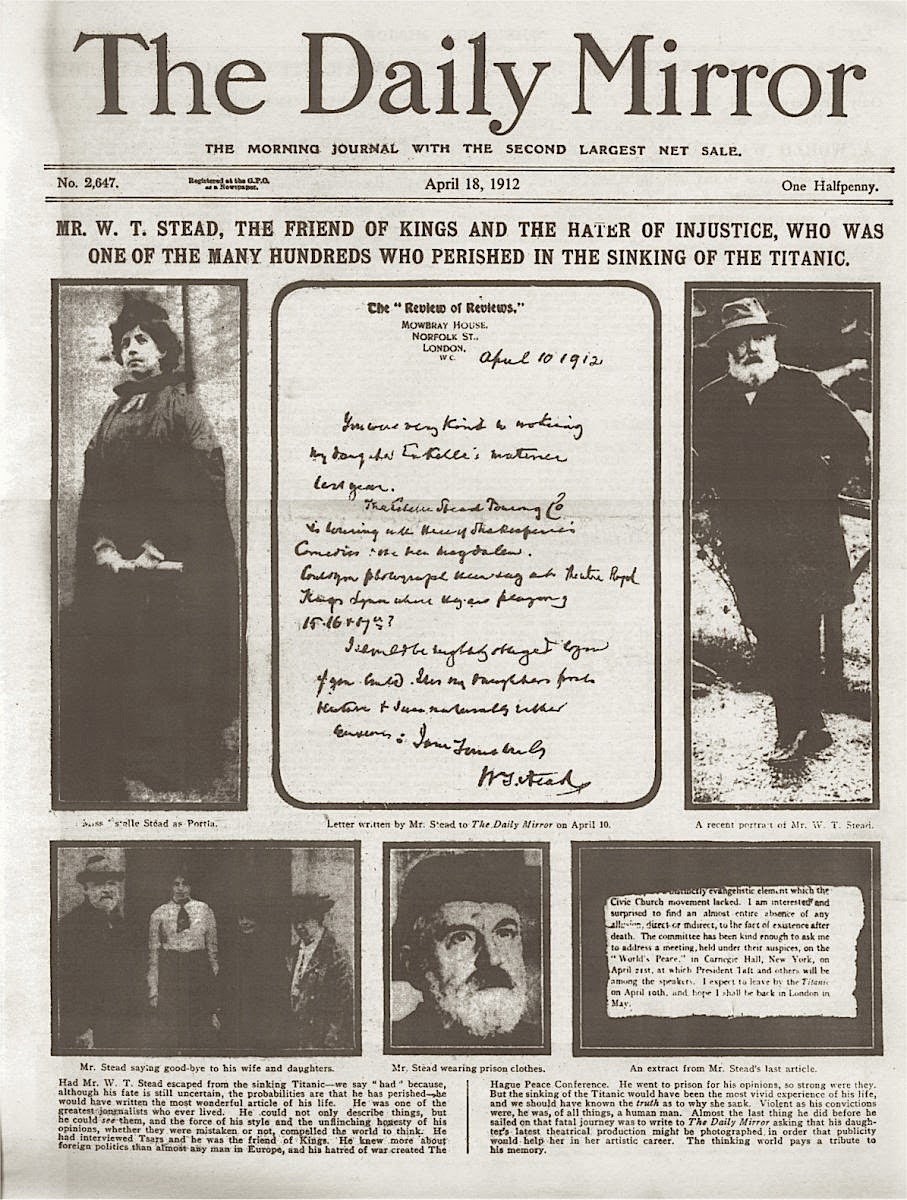
Stead was actually aboard the Titanic at the request of the US President, William Howard Taft. He had been invited to speak at a peace conference in New York.
There are multiple conflicting accounts of Mr. Stead’s last hours… one claims that he bravely went down with the ship, helping others into lifeboats to the last. Another account says he was last seen clinging to a life raft with millionaire John Jacob Astor until both men were overcome by hypothermia and were lost. And in perhaps the most famous account of this historic tragedy (in Walter Lord’s 1955 book, A Night to Remember), Stead simply passed his remaining moments on earth quietly reading a book in the first-class smoking room.
Spiritualists encouraged this particular version of events because it promoted their image of Stead as a gifted precognitive seer, bravely facing the death that he himself had foreseen. And whether or not it’s the truth, it’s the dominant narrative that persists to this day.
*****
Gurney, Myers, and Podmore didn’t have proton packs, PKE meters, or coordinated jumpsuits, but they did make a lasting contribution to what we understand about Victorian attitudes about the supernatural world.
The Society for Psychical Research is still active after 135 years, still investigating psychic and paranormal phenomena. Perhaps they’ll deploy a new team of Ghostbusters to do a Ghost Census for the 21st century?