

Director: Robert Wiene
Stars: Werner Krauss, Conrad Veidt
Snack Report: Reese’s Cups (Preview/test of Halloween candy. You can’t be too careful.)
One thing I can promise you about tonight’s Fright Night feature – you’ve never seen anything like The Cabinet of Dr. Caligari.
Before there was such a thing as a horror genre, there were other movies that had scary bits in them, but Caligari is considered the first true horror film.
The first thing you’ll notice about The Cabinet of Dr. Caligari is how bizarre it looks. The sets were made out of paper, with light and shadows and objects painted directly onto the walls and floor. There is no presence of the natural world in any part of the film – all shooting took place indoors.
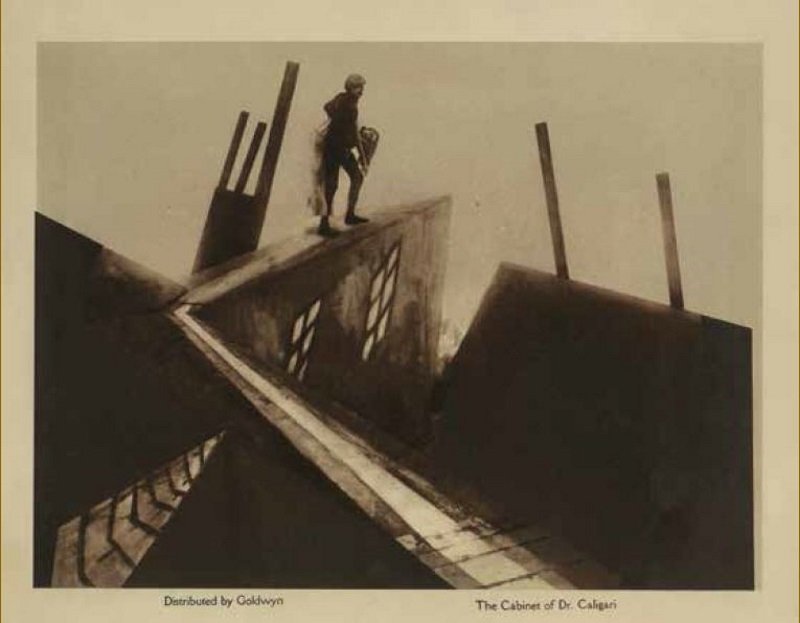
Everything fits together in unpredictable and jarring ways, and there is no such thing as a right angle. Stairways veer off in unexpected directions, and windows and doors tilt in a dizzying way. Even plants and trees look are jagged and unnatural. Every scene looks and feels like a nightmare.
In other words, the entire setting is insanely surreal, like if Dali and Picasso got drunk and made a movie together.
The distortion of reality disorients the audience to produce an emotional effect, which was exactly the intention of the new genre of German Expressionism – and The Cabinet of Dr. Caligari is regarded as its prime example.
German Expressionism evolved out of the social and political turmoil that followed the First World War.
As everyone knows, World War I didn’t end well for Germany. The harsh punishments imposed by the victorious Allies resulted in terrible hardships for the German people, and they blamed the inept Weimar government for their suffering.
But as they always do, people still created art.
The new film genre evolved as filmmakers in postwar Germany compensated for their threadbare budgets by using bizarre, nonsensical set design. The stories they told, triggered by the horrors of the Great War and its aftermath, were often tales of madness and treachery, where nothing is as it seems…
In the prologue, a young man named Francis relates a story to an old man about the traumatic experience that he and his fiancée recently went through.
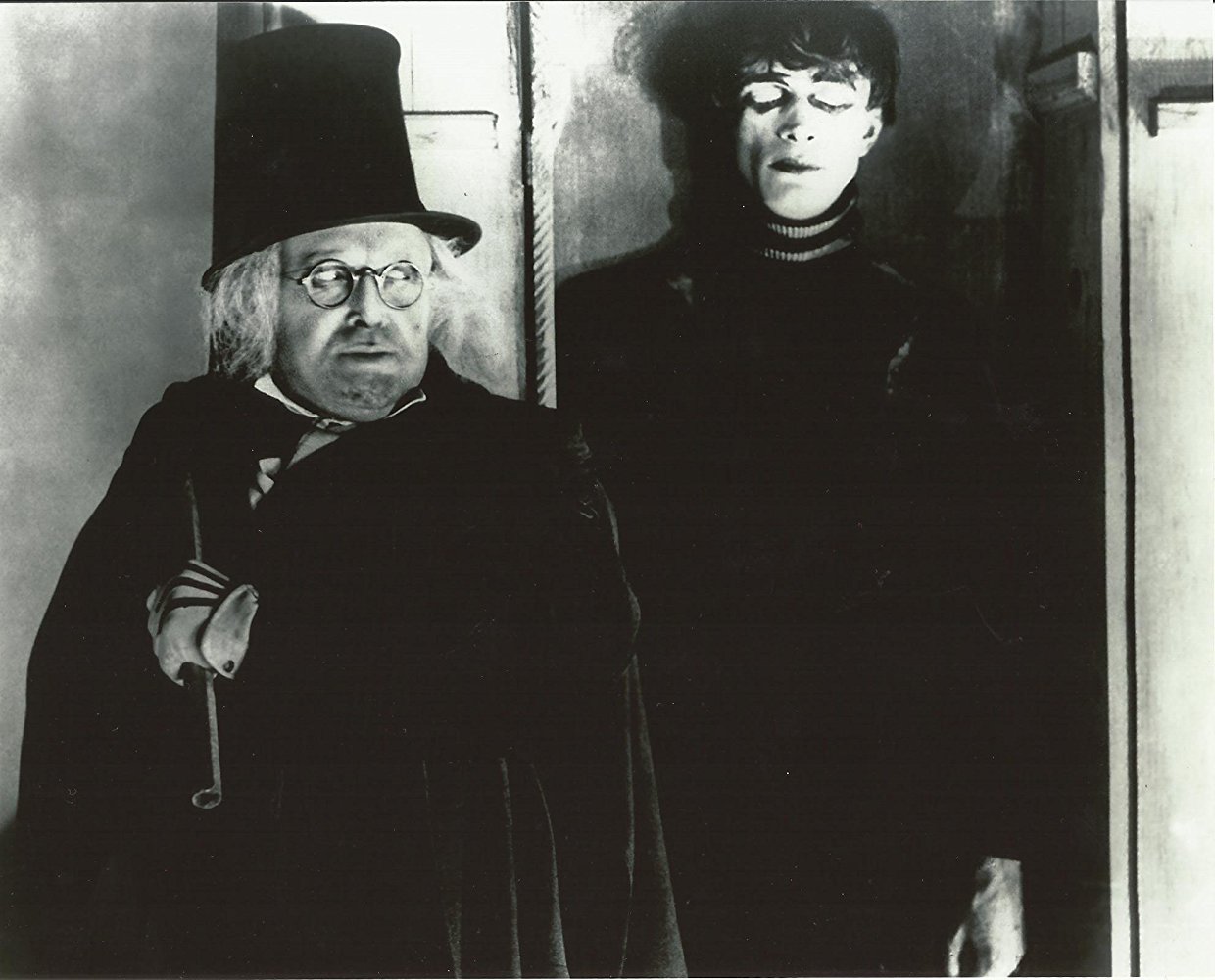
A sideshow operator/hypnotist named Dr. Caligari arrives in Hostenwall and requests a permit to set up his tent show at the local annual festival. His show features Cesare, a 23-year-old somnambulist who sleeps in a coffin.
The Doctor claims Cesare has been asleep since birth. Cesare also looks like a very tall and especially creepy mime with a bit of a Robert Smith vibe.
Francis, Jane, and Alan visit the Hostenwall Fair and can’t resist checking out the show. The mysterious Dr. Caligari claims that in his trancelike state, Cesare can answer any question. Alan asks “When will I die?” Cesare answers that he will die by dawn.
It should come as no surprise that Alan is found dead the next morning. Francis suspects Cesare is responsible for Alan’s murder and for other crimes as well, and he’s determined to prove it. The next night, Cesare appears at Jane’s bedside, ready to kill her, but he has second thoughts and just kidnaps her instead.
Francis is certain that Dr. Caligari is behind all of it, controlling Cesare and forcing him to do his evil bidding. He urges the police to investigate Dr. Caligari’s establishment at the fair, but the wily doctor manages to escape. As Francis closes in on the evil Caligari, he sees him disappear into an insane asylum and follows him, certain that he will find the answers he’s looking for there.
I won’t spoil it by telling you what comes next, but it’s definitely not what you were expecting. Suffice to say, Caligari is among the first films to introduce the tropes we now refer to as the Twist Ending and Unreliable Narrator.
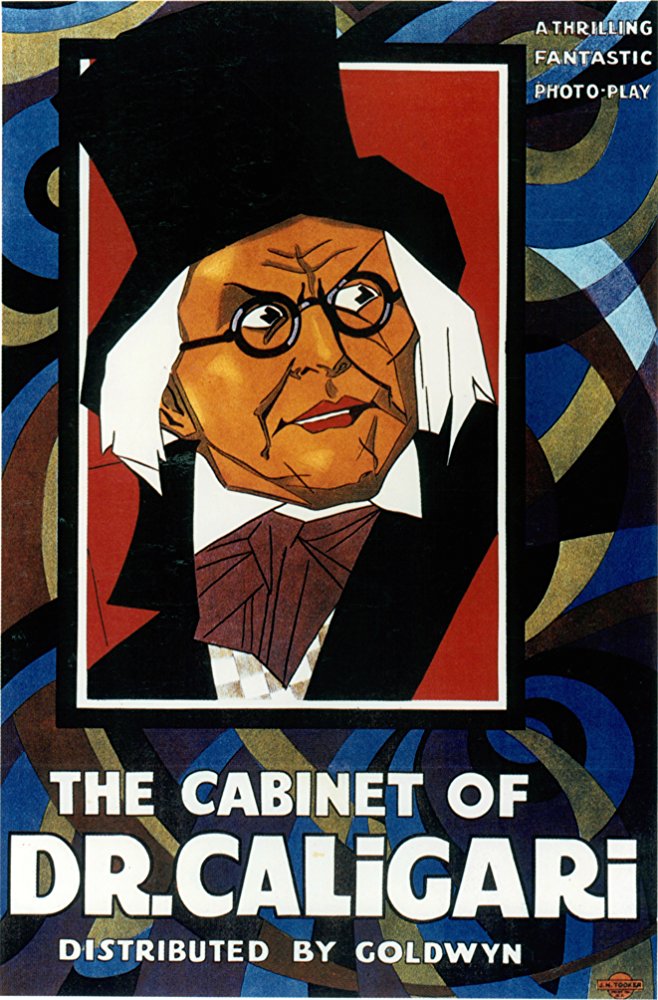
The Cabinet of Dr. Caligari has influenced countless filmmakers. It certainly was especially influential for what came after in German Expressionism, including Nosferatu (1922), Metropolis (1927), and M (1931) (which served as a bridge into the new genre of film noir).
The late, great Roger Ebert included it in his “Great Films” list. He summarized it well in his review, commenting that “[Wiese] is making a film of delusions and deceptive appearances, about madmen and murder, and his characters exist at right angles to reality.”
A few interesting facts about The Cabinet of Dr. Caligari:
- The film was considered too disturbing for German youth (and youths of other countries as well).
- Though it’s considered one of the greatest films ever made, it was booed when it premiered in New York City in 1921, and many patrons demanded their money back.
- One theater in Paris ran Caligari continuously for seven years.
- The sets cost a total of $800, and the lead actors were paid $30 a day.