
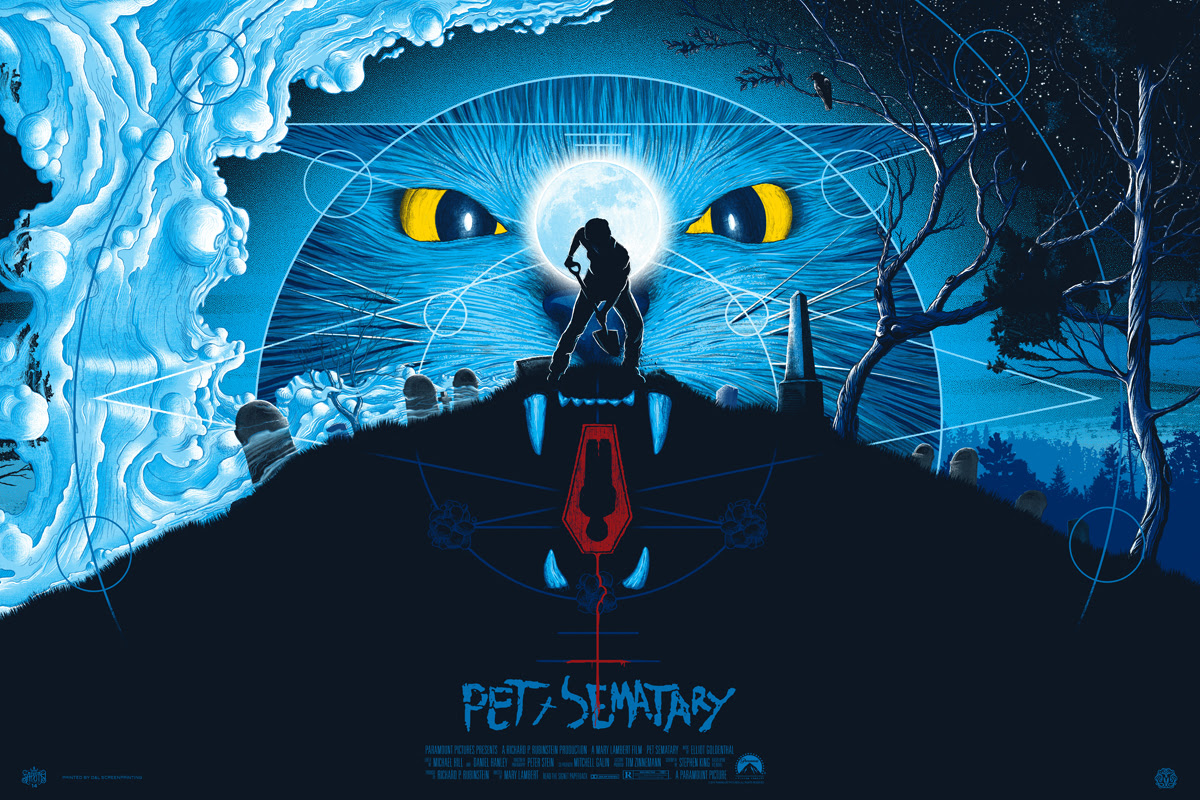
Director: Mary Lambert
Stars: Dale Midkiff, Denise Crosby, Fred Gwynne
Snack Report: Raspberry/Chocolate Strudel
I’ve always felt that Pet Sematary was Stephen King’s darkest work. In fact, King sat on the sad story of the Creed family for several years because his friends and family hated it. They thought it was so dark, no one would want to read it.
I get where they were coming from… reading the novel, I was overwhelmed by a sense of impending doom. Like a runaway train of tragedy and sorrow; very bad things were going to happen to these nice people, things that could not be avoided or escaped.
You would think by now people would know to stay away from Indian burial grounds. But noooo….
King’s films and novels often rely on the time-tested trope of “The Bad Place.” Sometimes it’s a haunted hotel. Sometimes it’s a cursed house or (for King in particular) even the entire town of Derry, Maine. Whatever lurks in the burial ground – be it the Wendigo (native American evil spirit) of the novel, or ghosts, or just some evil force, you know our happy family is in for some bad shit.
We can see it coming a mile away, though for some reason the characters cannot. We can predict what’s going to happen, and we’re powerless to stop it. It’s one of those movies where I have to restrain myself from yelling – “Don’t go in there!” or “Don’t bury the cat/kid in the Bad Place!” or “He’s hiding under the bed!”
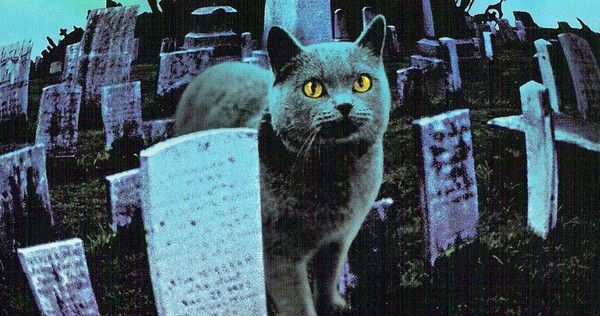
So if you’re ready for a serious downer, here’s what happens:
It looks like a pretty sweet deal when young doctor Louis Creed and his wife and two adorable children move into a big old house in the country. The cool old dude across the street (Jud/Fred Gwynne, who does an amazing job in this role) soon becomes the family’s grandfather figure.
Of course, he warns them about the dangerous highway where giant tanker trucks roar past about every 30 seconds. (Why would a family with small children move into a house with no fence, fronting onto a dangerous road?)
In case you didn’t notice, this is some heavy-duty foreshadowing, so again, you have a very good idea where this is all headed.
Jud takes the family to check out the local “Pet Sematary,” where local children have been burying their beloved pets (most of whom went to Valhalla by getting run over on the highway) for generations. Mom Rachel is creeped out by this and prefers her kids not be exposed to it.
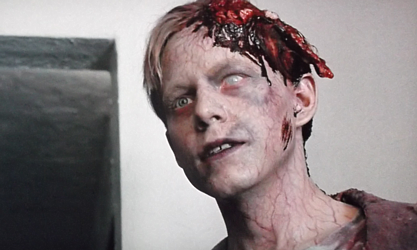
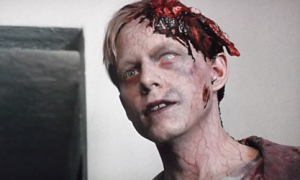
As you knew they would, that’s when things start to go south. On Louis’s first day on the job at the local college campus, Victor Pascow is brought into the infirmary with half his skull missing after being hit by a truck. Before the poor kid expires, he hisses out a warning to Louis about not messing in things he doesn’t understand.
Not too long after that, his daughter Ellie’s pet cat Church also falls victim to the highway. (Seriously, why are trucks not banned in Maine???) Rather than just letting him go to the great litter box in the sky where he’ll get Fancy Feast every day, Jud convinces Louis to bury poor Church in the secret evil Indian burying ground so he’ll be resurrected.
And before you can say “Hello Kitty,” he comes home… though there’s something off about him. (The Original Grumpy Cat?) Now he’s mean as hell, and he stinks.
Naturally, more misery and tragedy is in store for the Creed family. This is a Stephen King movie, after all. A family kite-flying outing turns into a parent’s worst nightmare when poor little Gage becomes the next victim of the Killer Road.
The whole family grieves, but Louis can’t stop thinking about the Indian burial ground behind the Pet Sematary. Against all logic and reason, he sends his wife and daughter to visit the grandparents, ignores Jud’s warnings (and Pascow the Friendly Ghost as well) and exhumes his son’s body, reburying him in The Bad Place.
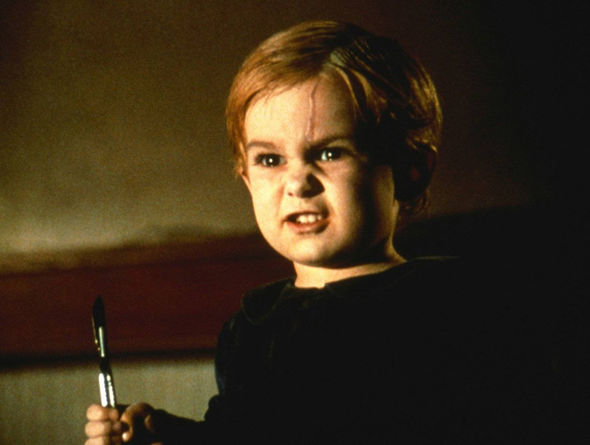
It doesn’t take long before the rock mound over the kid’s new grave starts to tremble, and a dirty little hand pokes up. And if you thought the cat was bad, Gage the zombified toddler turns out to be a lot worse. He heads straight for Jud’s house and… well… you knew this wouldn’t end well.
Unlike horror films of olden times where the evil thing was always defeated in the end, Pet Sematary provides no closure. Whatever is in store for Louis Creed, it can’t be good.
***
Until It (2017) crushed it at the box office, Hollywood had a penchant for turning Stephen King novels into terrible movies. King’s novels are deeply into the characters’ internal monologues, something it’s really difficult to express on film. Not to mention the depth of character development, which is pretty much impossible.
Yet Pet Sematary is one of his better adapted works, perhaps because he controlled the screenplay and was closely involved in the filming process. It isn’t a great horror film, but it does have plenty of suspense and a good number of sudden scares (often cat-related). And I promise the creepy zombie child will haunt your nightmares for the near future.
But in my opinion, it’s the effective creation of that suffocating sense of dread that you can’t shake off that makes this one of King’s best adaptations.
Here’s the movie trivia you’ve come to expect:
- Fred Gwynne’s hair was dark, and had to be repeatedly dyed white for the part of Jud.
- In case you’re wondering why little Miko Hughes (Gage) wasn’t traumatized for life from filming this movie, he was very carefully used only in certain scenes where no violence or scary stuff takes place. A puppet or dummy was used for the others.
- Pascow’s ghost was played by actor Brad Greenquist, who was always sad because when he was in makeup, none of the other cast members would eat lunch with him.
- Stephen King had the idea for Pet Sematary when his daughter’s cat Smucky was killed on the highway outside their home. Smucky’s name appears on one of the hand-lettered tombstones in the pet graveyard.
- Speaking of Fred Gwynne… Jud mentions that his childhood pet, Spot, is buried in the graveyard. Spot is the name of the Munster family’s pet dragon.