

Director: Herk Harvey
Stars: Candace Hillegoss
Snack Report: GH Cretor’s “The Mix” (cheddar and caramel corn IN ONE BAG!)
Viewing Companions: Zelda, Mr. Falbeaux
Carnival of Souls is one of those movies that conventional wisdom predicts will languish in obscurity, directed by yet another delusional amateur who decided to try his hand at making a feature film. With a bare-bones budget, amateur cast, and a cobbled-together a mishmash of clichés, trite tropes, and ineptitude, it couldn’t help but fail… Only this time, it didn’t.
Director/producer Herk Harvey indeed had Ed Wood-like aspirations of grandeur, considering he started out as an actor and director of educational and industrial films. His intention was that Carnival of Souls would have “the look of a Bergman and the feel of a Cocteau.” And strangely enough, he succeeded.
Despite being filmed in only three weeks with a total of six crew members on a $30,000 budget, this little film holds up better and looks better than a lot of other movies of its era with much deeper pockets.
While driving through Utah on business, Harvey was intrigued by Saltair, an abandoned salt-water bath resort/amusement park. He scraped together some financing and recruited his colleague, industrial film writer John Clifford, to come up with a script. All he asked is that the last scene involve a bunch of ghouls dancing in that abandoned ballroom. Clifford delivered the full screenplay in just three weeks.
But you wouldn’t know it. For a movie that was rushed to release, Carnival of Souls delivers effective psychological horror without resorting to jump scares and gore. The dead souls/ghosts/zombies rising out of the lake to take a twirl around the dance floor in the decaying ballroom is simply unforgettable. Even the ominous organ score that haunts Mary throughout the film is chilling and unsettling.
The film starts out innocently enough. Our heroine, Mary Henry, is out for a summer afternoon drive with her girlfriends when a car full of no-good juvenile delinquents challenges them to a drag race. (If films of that era are any indication, this was an everyday occurrence back then.) The girls foolishly accept, and predictably, it ends badly. The girls’ car crashes through the bridge railing and plunges into the water.
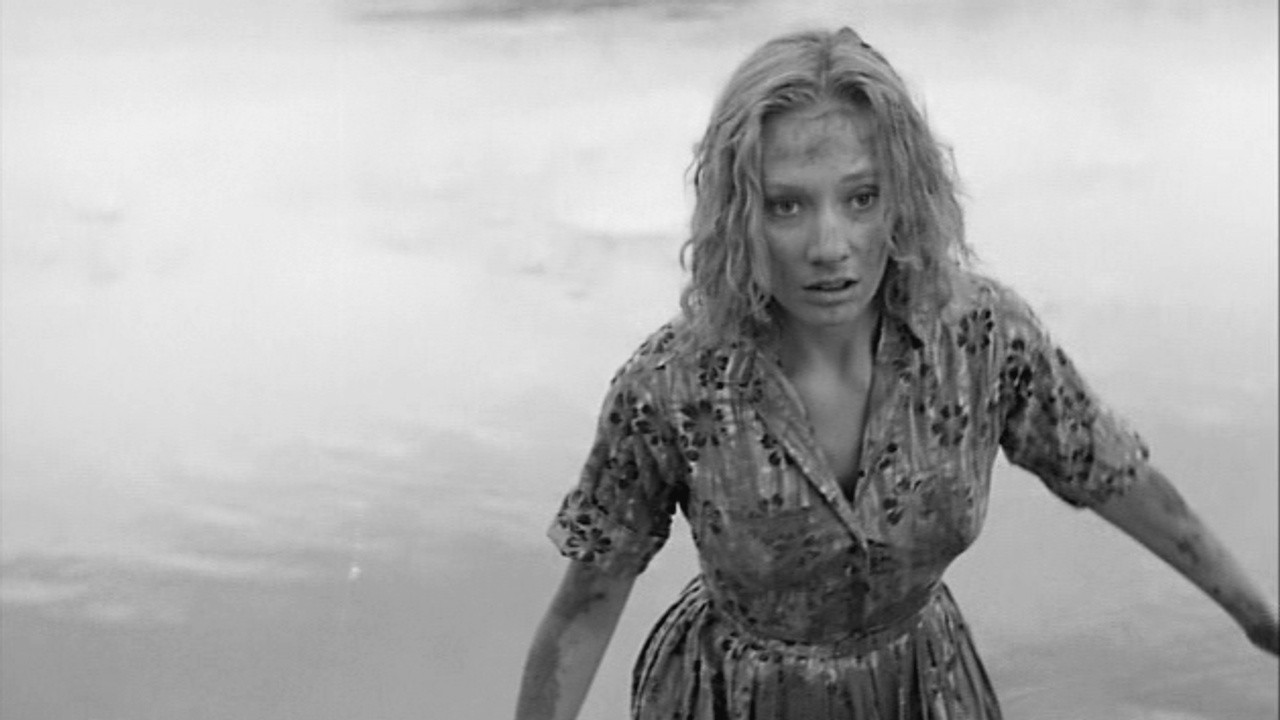 As police search for the car, hope is fading, but miraculously, Mary emerges ,muddy and dazed from the river, the sole survivor of the crash. But yet… there’s something different about her.
Seeking a fresh start, Mary accepts a job as a church organist in Salt Lake City. But she’s being followed by a sunken-eyed tuxedo-clad zombie-ish figure (director Herk Harvey himself, in a brilliant budget-saving move!) who seems to pop up everywhere she goes.
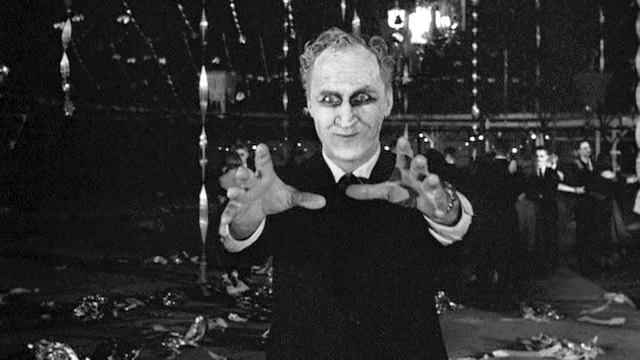
The ghostly man continually beckons her toward an abandoned lakeside dance pavilion, and the rest of the film is like a neverending dark dream, as Mary finds herself becoming increasingly detached from the world around her. In fact, it’s almost like she’s invisible…
The basic plot as well as the dreamlike quality of the film actually remind me a lot of Twilight Zone episodes, “The Hitchhiker” and “An Occurrence at Owl Creek Bridge.” And as so often happens on Twilight Zone, unsuspecting ordinary people find themselves crossing paths with the supernatural in their everyday lives
For a super-cheap quickie film created by a bunch of people who had never made a feature film before (including the director, crew, screenwriter, and leading lady), Carnival of Souls has been tremendously influential in the years since its underwhelming initial release.
George Romero almost certainly saw it before he envisioned Night of the Living Dead. David Lynch’s Eraserhead also shows obvious signs of its influence. In fact, the prestigious Criterion Collection released it as a Blu-Ray with 4K restoration in 2016. And in the ultimate “tribute,” an awful “remake” (basically a completely unrelated film that tried to leverage the same title) was released and flopped in 1998.
So how did this unique little low-budget B-movie become a cult classic when so many other old black-and-white horror films are forgotten? Carnival of Souls screenwriter John Clifford explains, “All I know is that the movie was created, directed, filmed and edited by people who loved the idea of making a picture—not to exploit anything or fit into any special niche, but just to make the best film they could with the limited resources available to them.”